
Japanese Dragon Tattoos: Meaning, Origins & Symbolism in Traditional Japanese Tattooing
The Japanese dragon (龍 / Ryū) is one of the most powerful and respected subjects in Japanese tattoos and traditional Japanese tattooing (most commonly known as Irezumi).
Known for its flowing body, fierce expression, and connection to natural forces, the dragon has become a timeless motif for large-scale tattoos such as Japanese tattoo sleeves, backpieces, and bodysuits.
Unlike Western dragons that are often portrayed as destructive monsters, the Japanese dragon tattoo represents wisdom, protection, strength, and balance.
For many collectors of traditional Japanese tattoos in Brisbane, the Sunshine Coast and surrounding areas, the dragon symbolises personal growth, resilience, and harmony with life’s challenges.
The Origins of the Japanese Dragon
The image of the dragon in Japan developed through centuries of cultural exchange with China, particularly through Buddhist teachings and Chinese mythology. Over time, these influences blended with native Japanese beliefs about nature spirits and water deities.
In traditional Japanese folklore, dragons are seen as divine guardians of nature. They are often believed to live beneath oceans, within deep lakes, or inside sacred mountains. Rather than bringing destruction, dragons control natural forces and help maintain balance in the world.
Because ancient Japan depended heavily on rainfall for agriculture, dragons became strongly associated with rain, rivers, storms, and the ocean. They were revered as beings capable of bringing life-giving water to the land.
This connection between dragons and water remains a central theme in traditional Japanese tattoo design, where dragons are frequently surrounded by waves, clouds, wind and lightning.
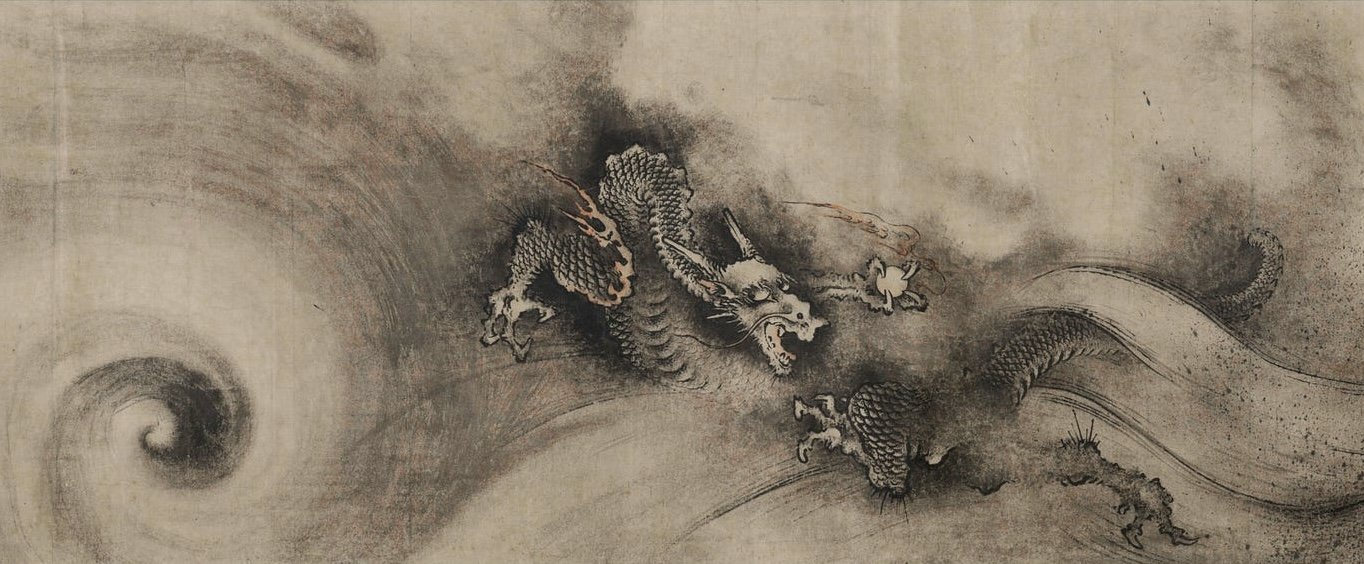
“Nine Dragons”, part of handscroll by Chen Rong (c.1244)
The Dragon as a Master of Water Elements
One of the defining characteristics of the Japanese dragon is its control over water. In mythology, dragons are believed to influence rainfall, rivers and oceans, storm clouds, tides and floods and so on.
This is why dragons in Japanese tattoo art are often depicted moving through clouds or rising from crashing waves. The imagery reflects their role as powerful yet balanced forces of nature. Water also symbolises adaptability and resilience, reinforcing the dragon’s association with wisdom and controlled power.
For many people choosing Japanese dragon tattoos in Brisbane or the Sunshine Coast, this symbolism represents the ability to navigate life’s challenges with strength and composure.
Moral Symbolism of the Japanese Dragon
Beyond its connection to nature, the traditional Japanese dragon tattoo carries deep moral symbolism.
Dragons traditionally represent wisdom, strength, protection, courage, good fortune as well as balance and harmony.
Rather than symbolising aggression, the dragon embodies power guided by intelligence and virtue. In many stories, dragons protect sacred places and offer guidance to those who are worthy.
Due to this, a Japanese dragon tattoo often represents personal discipline, spiritual growth, and the pursuit of balance in life.
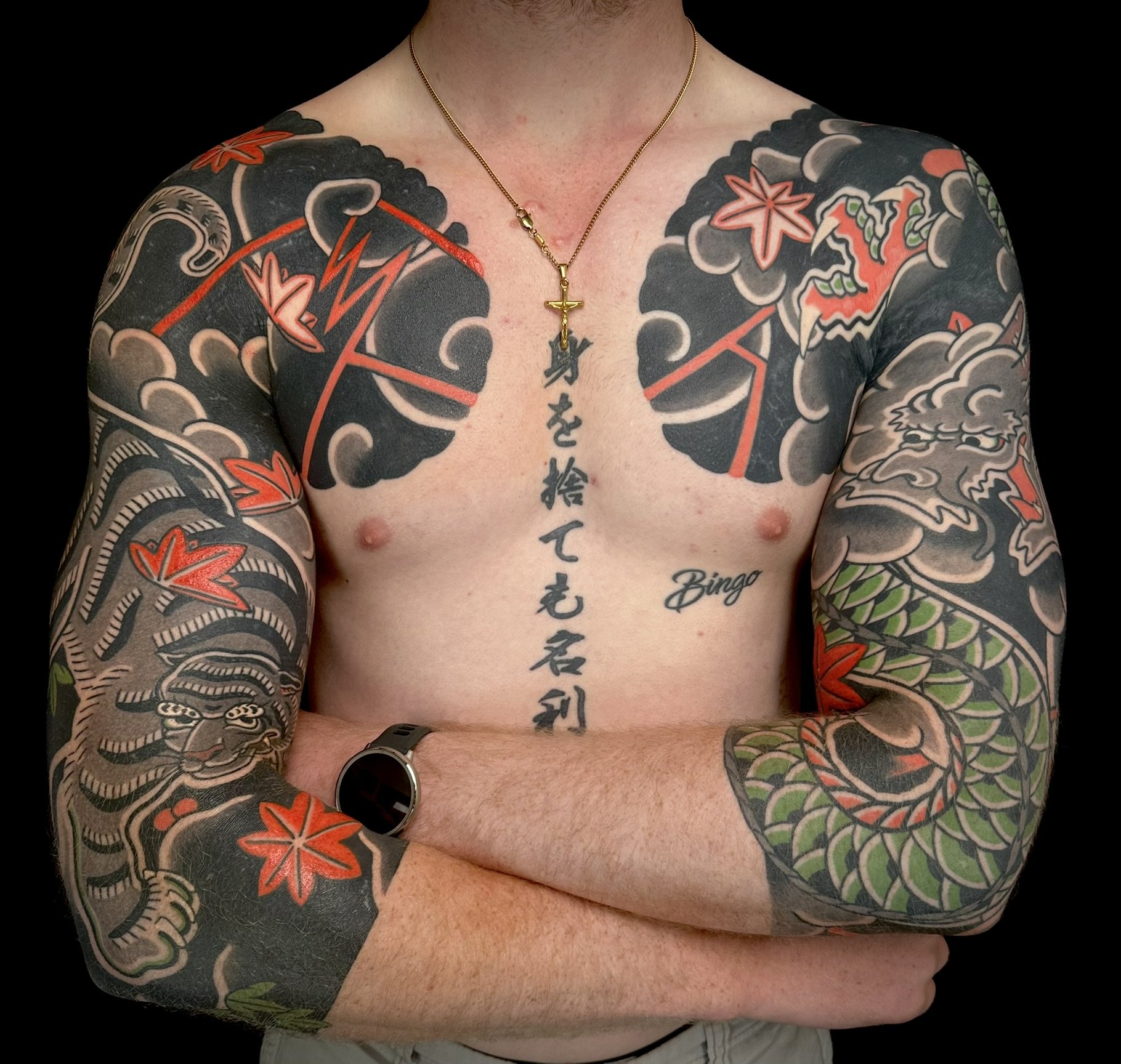
“Japanese Dragon & Tiger”, sleeves by Edward Neo
The Dragon’s Fusion of Nine Animals
According to East Asian mythology, the dragon is a creature formed from the strengths of various animals. The traditional description of a dragon includes traits from nine different animals, symbolising the ultimate combination of natural power.
These features are commonly described as:
• Horns of a deer
• Head of a camel
• Eyes of a rabbit
• Neck of a snake
• Belly of a Mizuchi (a legendary serpent like creature)
• Scales of a carp (koi)
• Claws of an hawk
• Paws of a tiger
• Ears of an ox
This fusion of animals represents the dragon as a perfect and balanced creature, combining the strengths of the natural world into one powerful being.
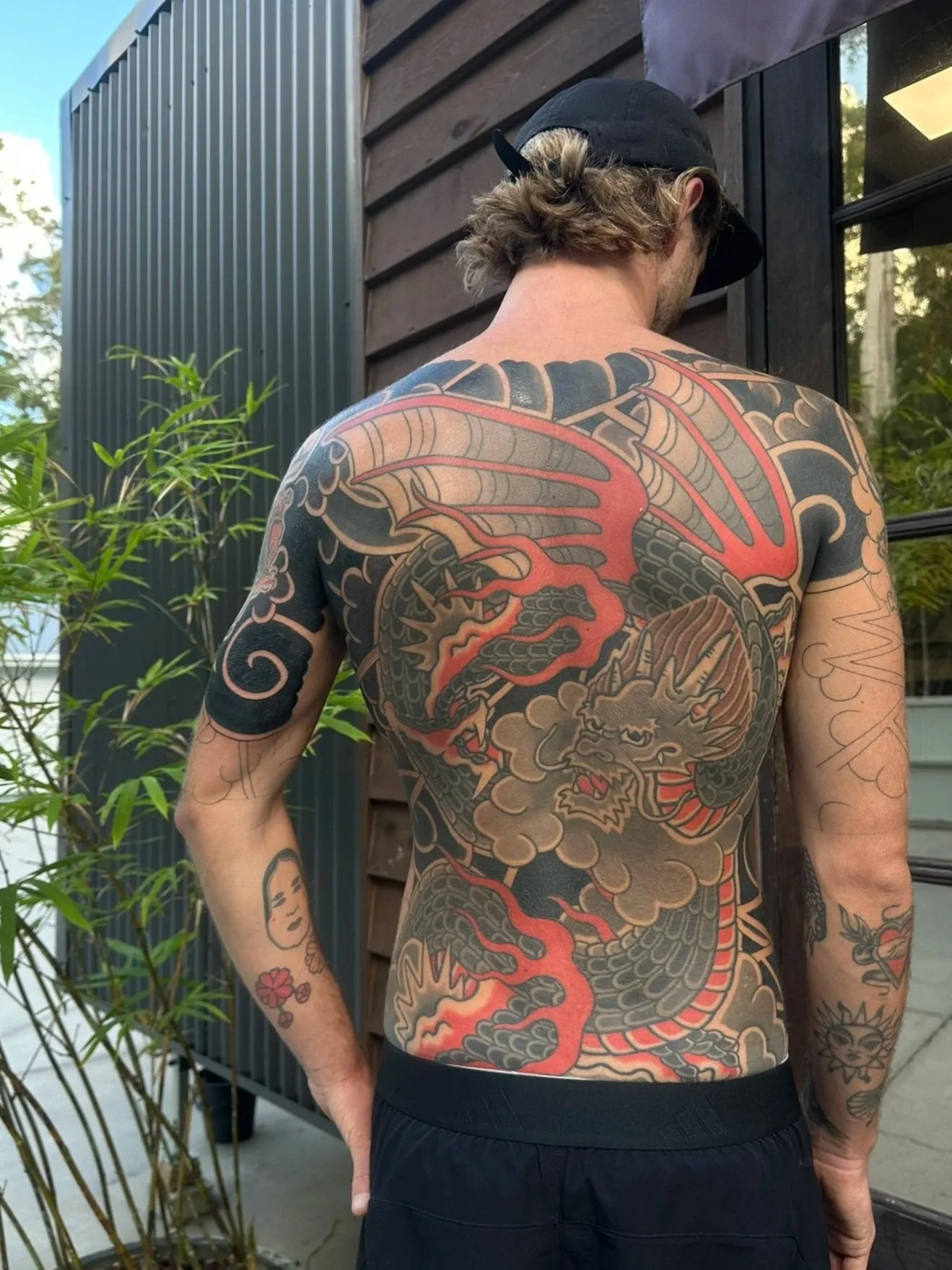
“Winged Dragon”, Japanese backpiece tattoo by Edward Neo
Types of Dragons in Traditional Japanese Tattooing
Within Traditional Japanese tattooing, several variations of dragons appear, each with unique meanings and visual styles. Below are some examples of them.
応龍 (Ōryū – The Winged Dragon)
The Ōryū is a rare dragon depicted with wings. In mythology, it is believed that it represents the ultimate stage of a dragon’s 3000-year evolution. As a weather controlling diety, it roams the skies and creates storms. In Japanese tattoo symbolism, the Ōryū can represent ancient power, spiritual evolution, and transcendence.
雲龍 (Unryū – The Cloud Dragon)
The Unryū, or cloud dragon, moves among the heavens and controls storms and rainfall. In tattoo imagery, it is often shown weaving through swirling clouds. This dragon symbolises divine authority, celestial power, and mastery over natural forces.
巻龍 (Kenryū – The Coiling Dragon)
The Kenryū, or coiled dragon, is depicted with its body tightly wrapped or spiraling. This posture symbolises contained strength and potential energy. In Japanese tattoo art, the coiling dragon often represents discipline, patience, and controlled power.
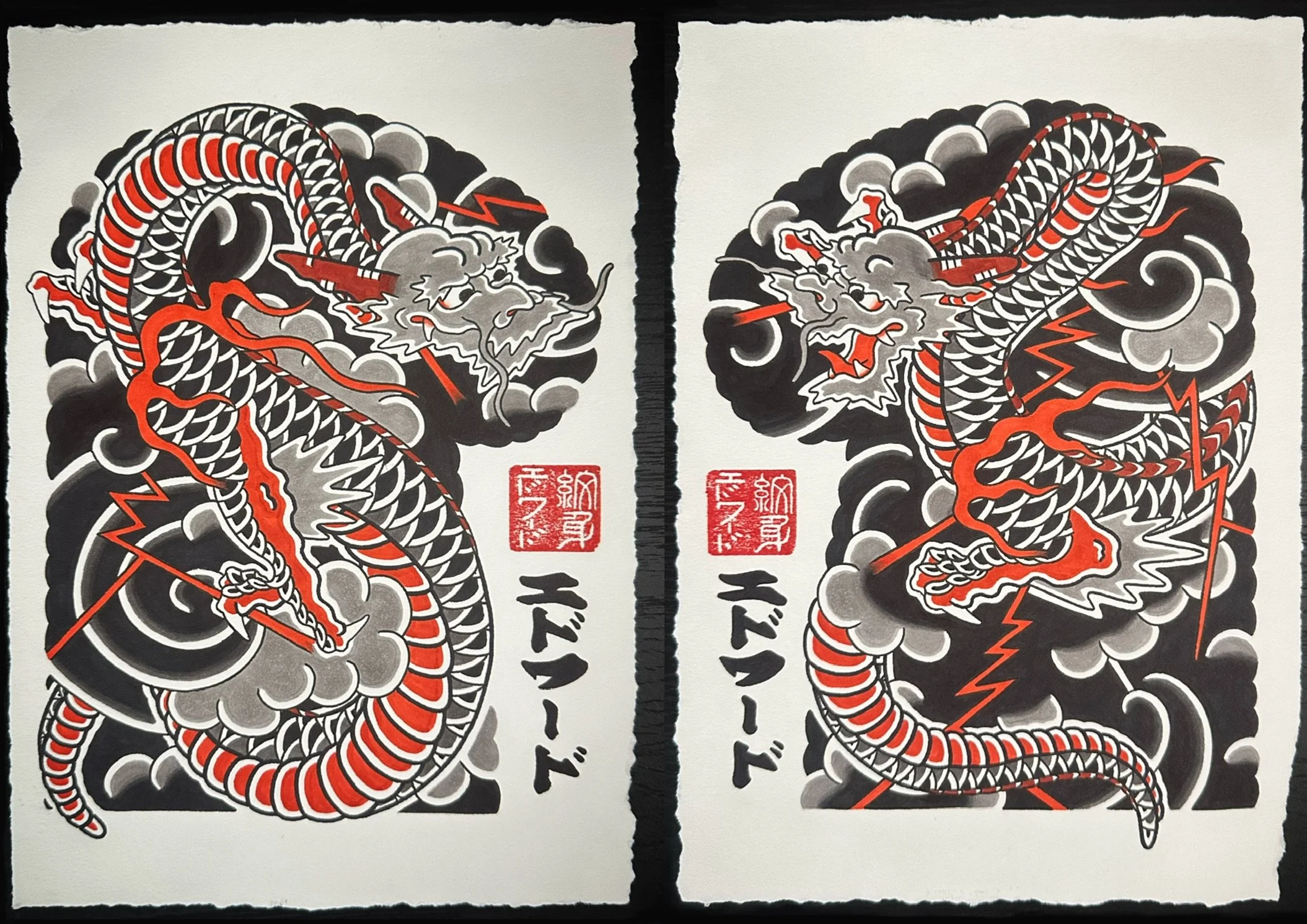
“Mukairyū”, dragon tattoo sleeves design by Edward Neo
Dragon Pairings in Japanese Tattooing
Large-scale Japanese tattoo compositions often combine dragons with other mythical creatures, folklore or depict multiple dragons interacting with one another. These pairings carry deeper symbolic meanings and below are some of them.
向かい龍 (Mukairyū – Facing Dragons)
The Mukairyū, or twin dragons facing each other, represents the balance of yin and yang. This pairing symbolises harmony and balance, cooperation and teamwork, healthy relationships as well as unified strength. In Japanese tattoo sleeves, Mukairyū designs are often placed on opposite arms so that the dragons face one another.
昇龍 & 降龍 (Shōryū & Kōryū - Rising and Descending Dragons)
The Shōryū is the rising dragon, representing ambition, growth, and upward movement. The Kōryū is the descending dragon, symbolising protection warding off evil spirits, grounding, and returning with knowledge. Together, they reflect the cycle of striving, learning, and balance between heaven and earth, all while ensuring a safe and smooth journey.
龍と鳳凰 (Ryū to Hōō - Dragon and Phoenix)
The pairing of dragon and phoenix represents harmony between opposing forces. The dragon symbolises strength, wisdom and authority, while the phoenix represents peace, grace, and happiness. Together they form a powerful symbol of balance, prosperity, and harmonious partnership.
龍虎 (Ryūko - Dragon and Tiger)
The Dragon and Tiger pairing is one of the most famous rivalries in Japanese art. The dragon represents wisdom and the heavens, while the tiger symbolises earthly strength and courage. Together they bring about the balance between intelligence and raw power.
龍と鯉 (Ryū to Koi - Dragon and Koi)
The pairing of the dragon and koi fish comes from the famous legend of the Dragon Gate. According to the story of 登竜門 (Tōryūmon), a koi fish that swims upstream and leaps over the Dragon Gate waterfall transforms into a dragon. Because of this legend, the koi symbolises perseverance, determination, and transformation, while the dragon represents achievement and mastery.
九紋龍 (Kumonryū – Nine-Tattooed Dragon)
Kumonryū originates from the classic Chinese novel “108 Heroes of the Water Margin (Suikoden)”. The warrior Shi Jin was given this title because his body was famously tattooed with nine dragons, symbolising great strength and a fierce warrior spirit.
In Traditional Japanese tattooing (Irezumi), Kumonryū represents immense power, resilience, and mastery over chaos. The imagery may appear as multiple dragons over a bodysuit on the wearer, creating a dynamic composition that emphasises youthful strength and rebellion. It may also be tattooed as Shi Jin, the character himself, making it a powerful subject for large-scale works such as Japanese backpiece tattoos and bodysuits.
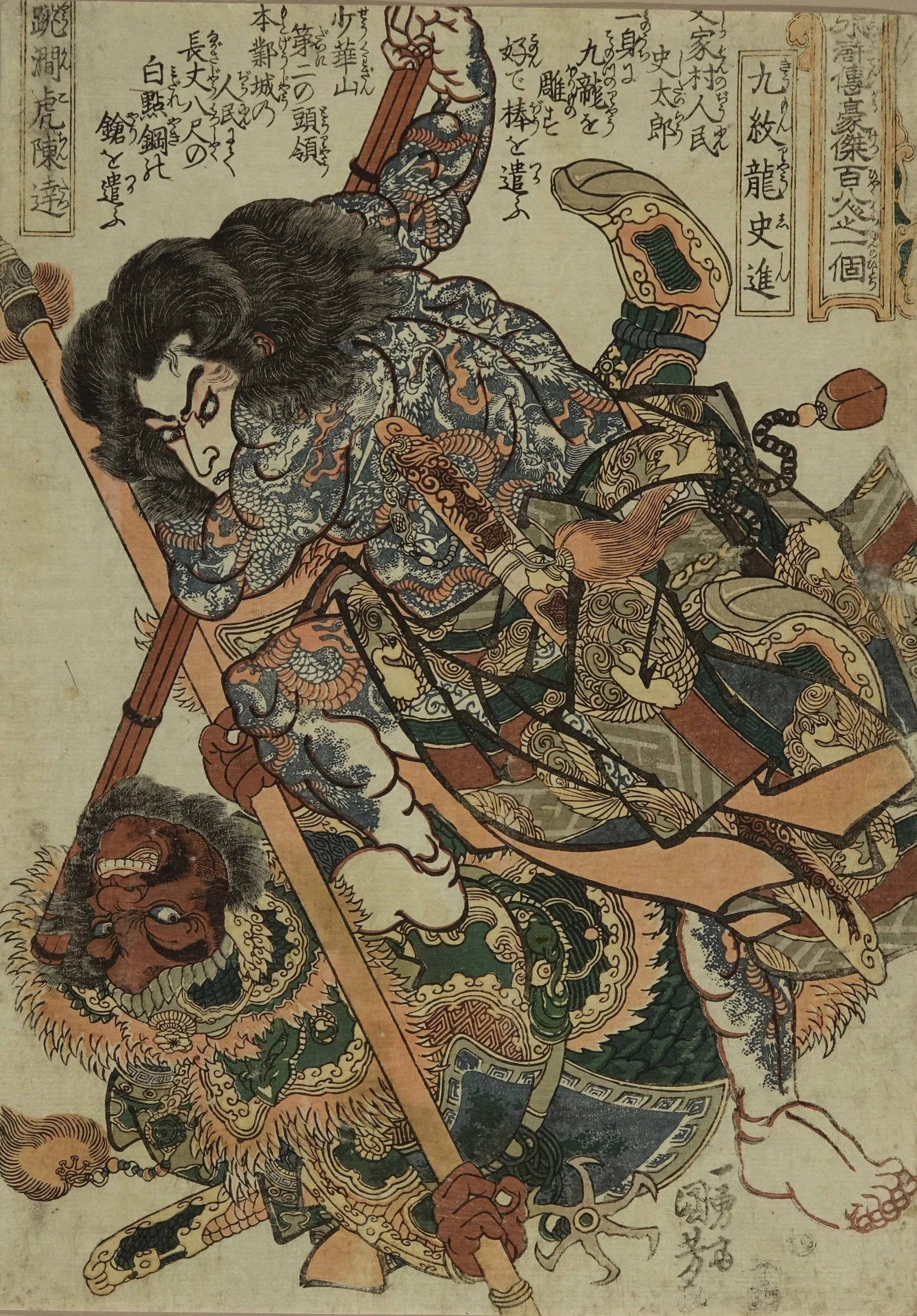
“Kumonryū Shishin”, woodblock print by Utagawa Kuniyoshi
The Enduring Power of the Japanese Dragon Tattoo
For centuries, the dragon has remained one of the most important subjects in Traditional Japanese tattooing. Its connection to mythology, nature, and moral symbolism makes it a meaningful choice for collectors seeking large-scale Japanese tattoos.
Whether depicted as a rising dragon, winged dragon, coiled dragon, or paired with other mythical creatures, one can never go wrong with a Japanese dragon tattoo.
Japanese Dragon Tattoos in Brisbane, the Sunshine Coast and surrounding areas
For collectors seeking Japanese dragon tattoos in Brisbane or the Sunshine Coast, the dragon remains one of the most respected subjects in Traditional Japanese tattooing.
Its flowing form suits large-scale work such as Japanese tattoo sleeves, backpieces, and bodysuits, allowing the design to move naturally with the body.
Because of the dragon’s connection to water and natural forces, it is often paired with backgrounds such as waves, clouds, wind, and lightning, creating a dynamic composition that evolves over multiple sessions.
Working with an artist experienced in traditional Japanese tattooing helps ensure the design flows with the body and follows the visual storytelling that defines an authentic Japanese tattoo design.
If you are interested in starting your own traditional Japanese tattoo journey, you can book a complimentary consultation here.
-
A Japanese dragon tattoo symbolises wisdom, strength, protection, and balance. In Traditional Japanese tattooing (Irezumi), dragons are often seen as benevolent guardians connected to water and natural forces.
-
Unlike Western dragons, Japanese dragons are generally benevolent creatures associated with rain, protection, and harmony with nature.
-
A rising dragon (昇龍) symbolises ambition, growth, and the pursuit of higher goals.
-
Facing dragons (向かい龍) represent yin and yang balance, harmony, and cooperation between opposing forces.
-
Dragons are believed to control rain, storms, and bodies of water, so clouds and waves emphasise their connection to natural forces.
