
Takiyasha-hime, the Soma Palace, and the Summoning of the Gashadokuro: History, Folklore and Tattoo Inspiration
The story of Takiyasha-hime (滝夜叉姫), otherwise known as Takiyasha the Witch, sits at the crossroads of history and supernatural folklore in Japan.
Often set against the haunting backdrop of the ruined Soma palace, this story has lived for centuries through art, theatre, ukiyo-e prints, and now even in modern traditional Japanese tattooing.
Few Japanese legends blend political upheaval with yokai imagery as powerfully as this one, especially the iconic moment when Takiyasha-hime summons a monstrous Gashadokuro (餓者髑髏), the giant skeleton yokai.
From Rebellion to Ruin: Taira no Masakado and his daughter
Historically, the scene opens with Taira no Masakado, a powerful regional warlord who, in the 10th century, led a short-lived rebellion against the central court in Kyoto.
After Masakado was defeated and beheaded, his daughter, the semi-legendary Takiyasha-hime is said to have stayed behind at the family’s estate, the ruined Soma manor or shoen. Over time the palace, once a seat of power, became a liminal place: part decayed residence, part haunted ground where the unsettled dead and the living meet.
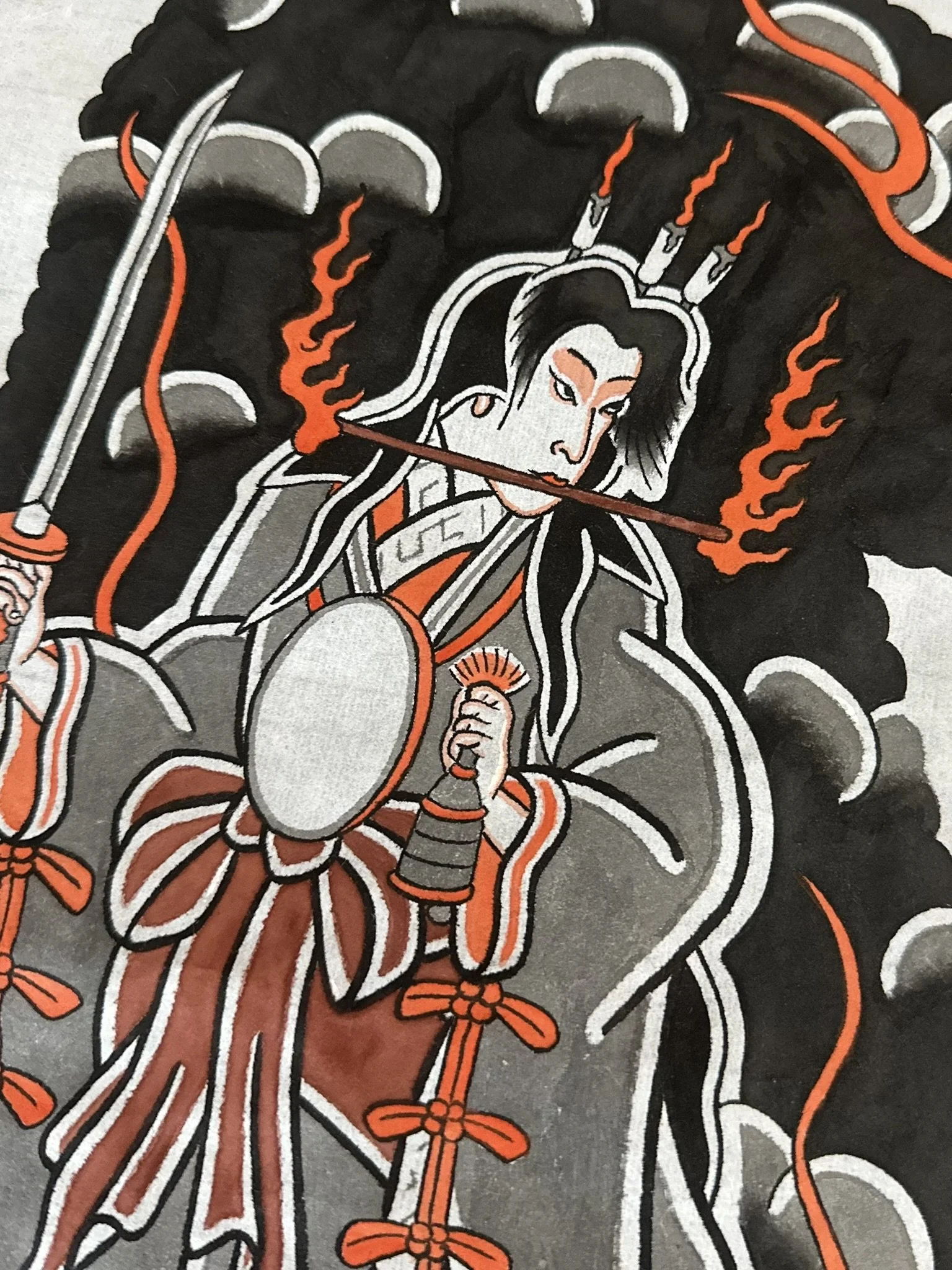
Witchcraft, Yokai and the Ruined Soma Palace
In the folkloric layers that grew around these events, Takiyasha-hime is more than a grieving daughter. She became a sorceress who gathered allies among outcast magicians, hermits and wandering yokai.
The Soma Palace transforms from a physical ruin into a theatre of the uncanny, where broken blinds and tatami are backdrops for conjuration and revenge.
Traditional tales describe Takiyasha-hime invoking spirits to frighten or destroy emissaries sent by the central government to root out remaining rebels.
Museums and historical collections often describe the palace as the focal point of these supernatural encounters.
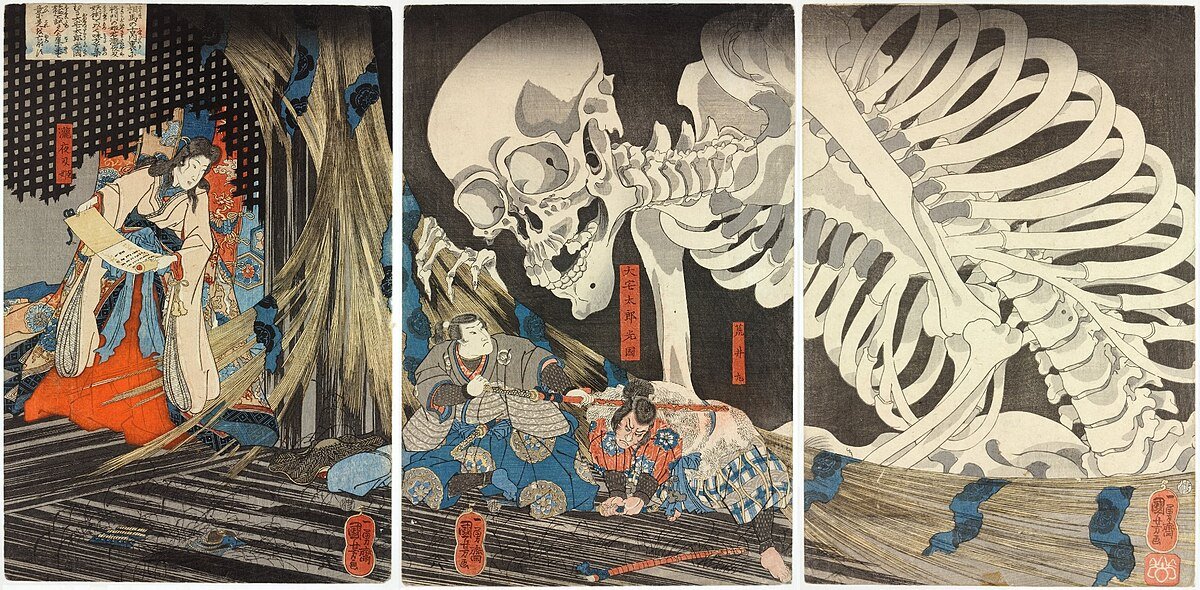
“Takiyasha the Witch and Skeleton Spectre”, woodblock print triptych by Utagawa Kuniyoshi
Summoning the Skeleton: Gasahadokuro and Kuniyoshi’s Image
The most famous visual of this legend comes not from the Heian period in the 10th century but from Edo period artist Utagawa Kuniyoshi. In his dramatic triptych, Takiyasha the Witch and the Skeleton Spectre, Kuniyoshi shows Takiyasha-hime reciting a spell from a hand scroll while a giant skeletal spectre looks through the torn blinds, a composition that fixed the image of a single colossal skeleton in the popular imagination.
Though earlier stories mention many life-sized skeletons, Kuniyoshi’s single enormous skeleton influenced later depictions of the Gashadokuro, the “starving skeleton”, made from the bones of those who died without proper burial, whether in battle or famine. The print became a visual shorthand for the fusion of historical revenge and monstrous retribution.
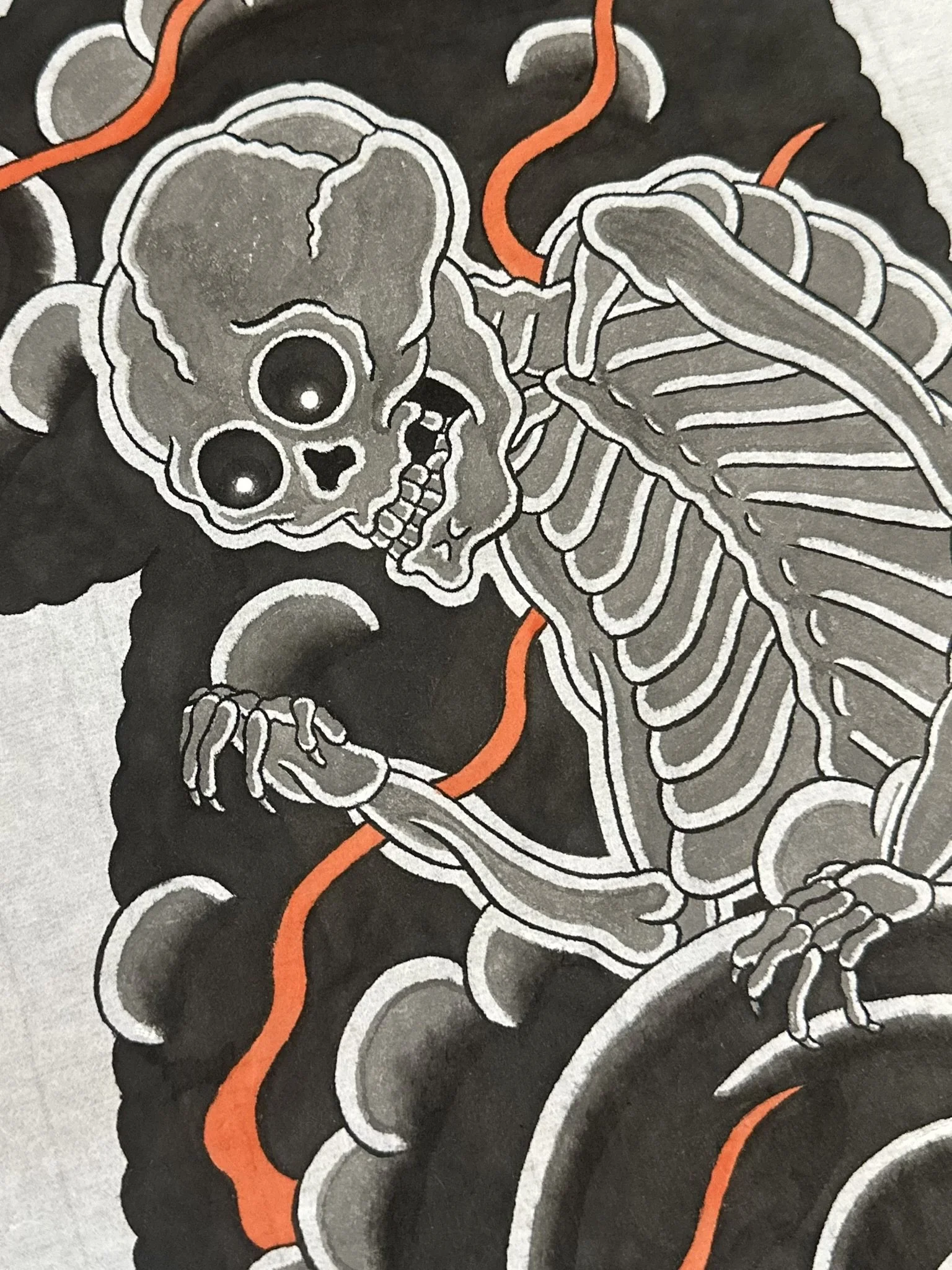
What is a Gashadokuro?
The Gashadokuro (literally something like “starving skull”) is a giant skeletal yokai. In modern folklore it is said to be formed from the bones of the unburied dead, of soldiers, famine victims or mass casualties assembled into a towering skeleton that stalks the night, often making a rattling “gachi gachi” of teeth.
While the specific name and codified form of the Gashadokuro are relatively recent developments in yokai studies, Kuniyoshi’s skeletal spectre is widely recognised as a formative image that shaped how later artists and storytellers imagined these enormous bone demons.
In many retellings, Takiyasha-hime’s spell animated such a skeleton to terrorise her enemies, an apt metaphor for revenge given physical form.
Legacy: Art, Literature and Modern Yokai Culture
The tale of Takiyasha-hime is one of those rare stories that move fluidly between history, legend and art. Kuniyoshi’s print has been reproduced, reinterpreted and referenced across centuries, informing later yokai creators (including manga and modern folklore compilers) and reinforcing the association between the Soma Palace, Takiyasha-hime, and the skeleton-type yokai.
The story also sits comfortably alongside other Night Parade and mass yokai tales, blending the political memory of regional conflict with the cultural need to explain and dramatise wronged spirits.
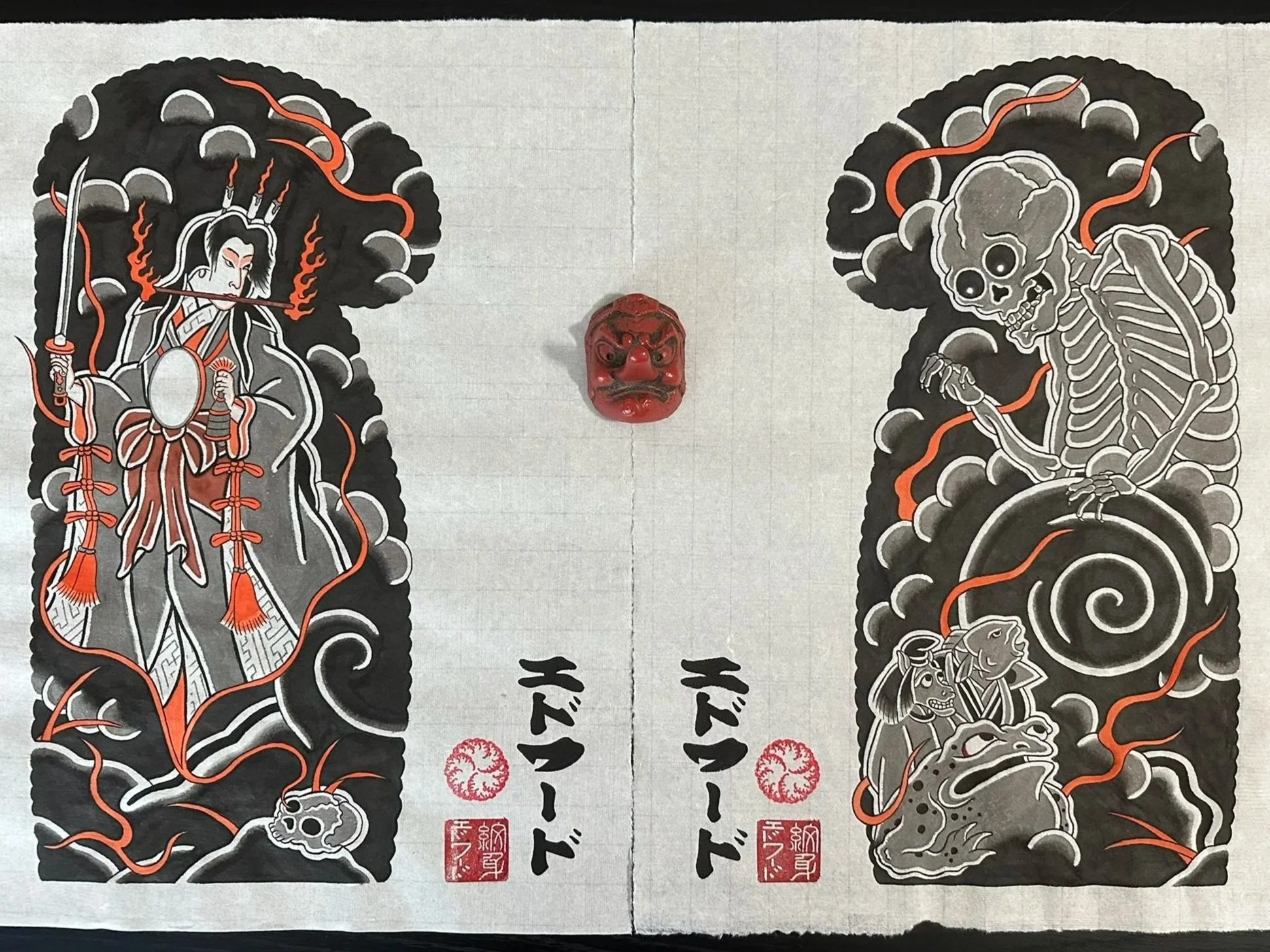
“Takiyasha-hime summoning yokai and raising Gashadokuro, the giant skeleton”, a pair of traditional Japanese tattoo full sleeve paintings by Edward Neo
Bringing Legend to Skin
In my own tattoos designs, I’ve explored both sides of this legend. One full sleeve painting is dedicated to Takiyasha-hime herself, her calm focus and spell casting posture, while another illustrating the colossal Gashadokuro, with its towering bones and relentless presence, along with other yokai. These artworks draw on the original folklore while carrying the bold, simplified energy of traditional Japanese tattooing, making the story wearable as a tattoo on the body.
If you are interested in starting your own traditional Japanese tattoo journey, you can book a complimentary consultation here.
