
The Meaning and Evolution of Traditional Japanese Tattoos
Japanese tattooing has a long and complex history. What began as markings of identity and status evolved into one of the world’s most recognisable art forms. Today, traditional Japanese tattoos continue to inspire artists and collectors around the world, carrying forward the spirit and symbolism that have defined this craft for centuries.
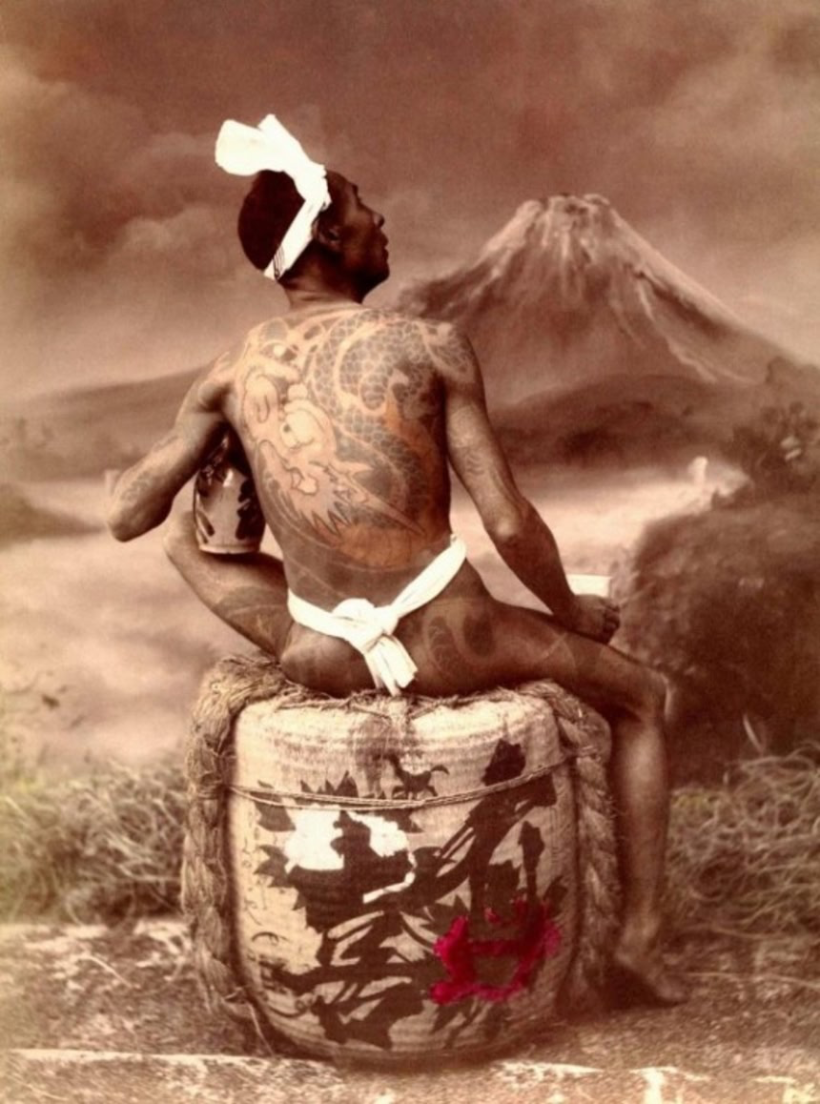
“Japanese Tattooing in the Edo Period”
The Definition of Tradition
Tradition is defined in the Oxford dictionary as “the transmission of customs or beliefs from generation to generation, or the fact of being passed on in this way.” When we speak of traditional Japanese tattoos, we are referring to not just a style of art, but to a living cultural tradition - one that carries stories, discipline and respect through time.
The Language of Japanese Tattooing
Japanese tattooing has several names, each reflecting a layer of meaning and history. They include:
Irezumi (入れ墨) - literally meaning “inserting ink”. This is the most common Japanese word for tattooing known today. Historically, it referred to punitive markings used as punishment in Japan and China.
Wabori (和彫り) - translates to “Japanese carving”. This term is often used by artists to describe Japanese-style tattooing, done with traditional motifs and techniques that follow the rules of composition, flow and storytelling unique to Japan.
Horimono (彫り物) - literally “engraved things”, a word that describes tattoos as works of art. It is also associated with full-bodysuits and back pieces, created by masters of the craft known as Horishi (彫師).
Bunshin (文身) - an older word for tattooing, meaning “marked body”. This term appeared in early Chinese and Japanese records describing the creating of patterns or designs on skin.
Each of these terms carries deep cultural weight, representing different stages in the evolution of Japanese tattooing, from stigma to artistry, and punishment to pride.
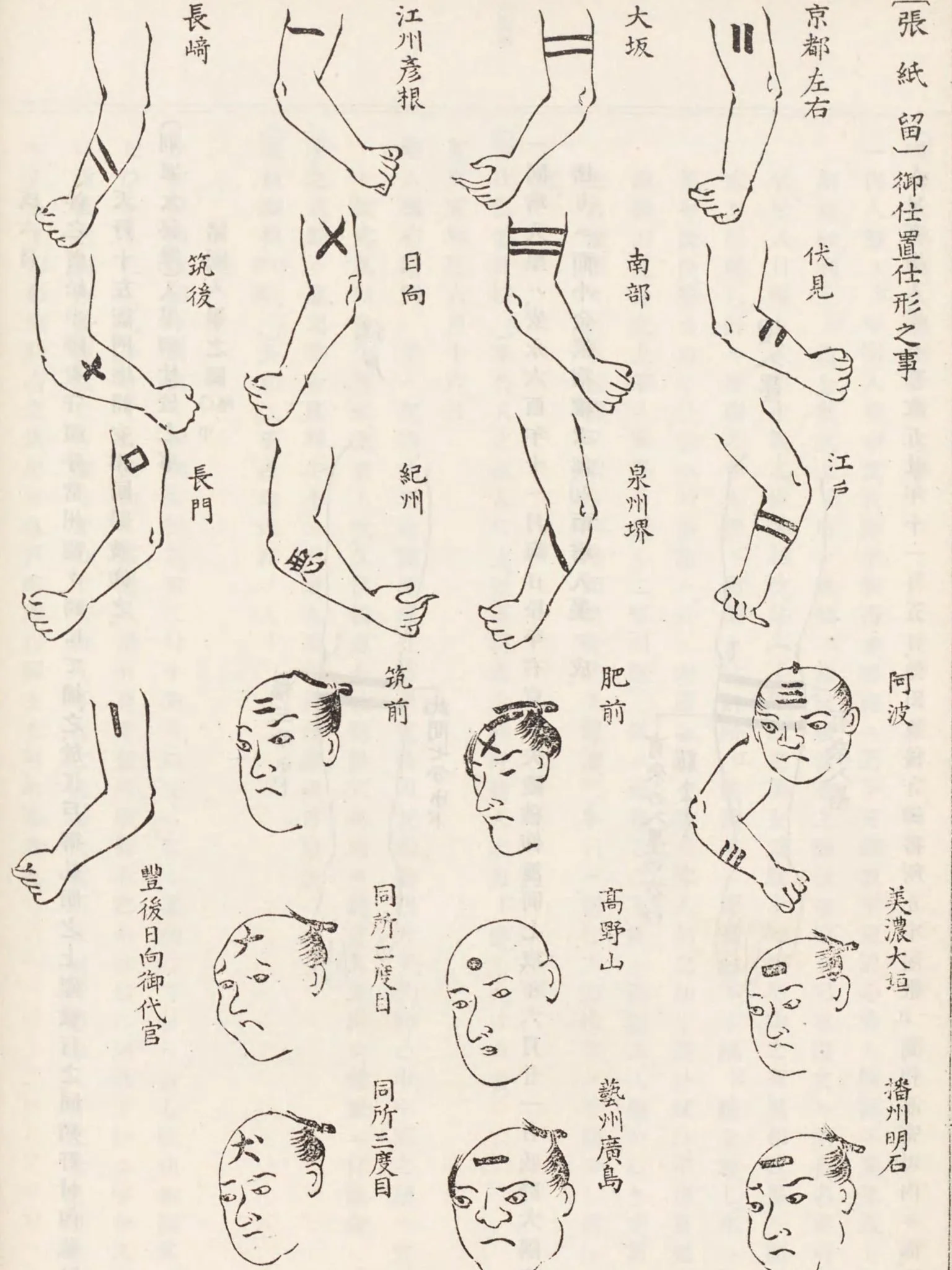
“Tattooing as punishment in the Edo Period”
From Punishment to Art
The earliest records of tattooing in Japan go back thousands of years, when prehistoric clay figurines discovered in the country testify to the fact that primitive-pattern tattoos may have existed since the Jomon period (around 13000 - 400 BC). However, in the Edo period (1603 - 1868), tattoos also took on a darker association.
Punitive tattooing was used as a form of punishment. Criminals were marked with specific designs or symbols on the face, arms or body - a permanent sign of their crime and shame. These markings made it difficult for them to reintegrate into society, and for a long time, tattooing carried that stigma.
It is said that some of the earlier forms of decorative tattoos began as cover ups of these punitive tattoos. With the rise of art appreciation among common people in the later part of the Edo period, artists and craftsmen began to reclaim tattooing as a form of decoration and expression. Inspired by woodblock prints (ukiyo-e) and heroic tales, they developed a distinct visual language of Japanese tattoo art - filled with dragons, koi, tigers, warriors and deities that represented courage, loyalty, perseverance and so on.
This marked the transformation from punitive tattooing to decorative art - from shame to beauty.
The Rise of Decorative Tattooing
By the end of the Edo period, traditional Japanese tattoos had become a highly respected underground art form. Firefighters, labourers and commoners often wore large tattoos as symbols of protection, honour and personal spirit. These designs were closely tied to folklore, Bushido (the way of the warrior), Buddhist teachings and so on.
The tattooers (Horishi) of this era used hand tools to insert ink under the skin (tebori). The process was slow, precise and deeply personal, often taking years to complete a full bodysuit or back piece. The level of dedication required from both artist and client made each tattoo a spiritual journey as much as an artistic one.
Even today, many traditional artists both in Japan and around the world, whether with tebori or machine tattooing, carry this sense of discipline and respect for the craft.
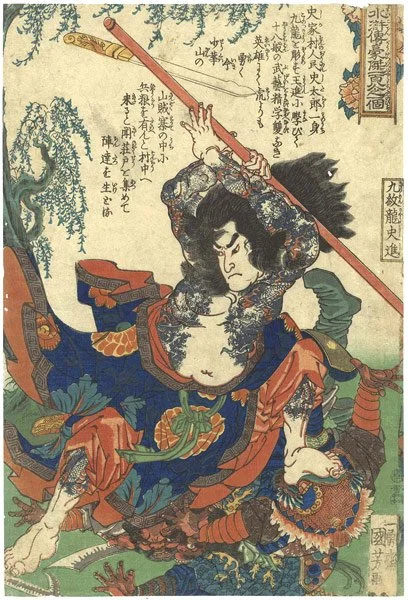
“Kumonryuu Shishin”, woodblock print (ukiyo-e) of an outlaw warrior by Utagawa Kuniyoshi
Symbolism in Traditional Japanese Tattoos
The power of Japanese tattooing lies not only in its visual beauty but its symbolism. Each motif carries a story. For example, dragons can represent wisdom, strength and protection. Koi can symbolise perseverance and determination through struggle. Getting a tiger tattooed can be for courage and warding off evil spirits. Cherry Blossoms manifest the fleeting beauty of life and acceptance of impermanence.
These symbols, along with many others are carefully placed across the body to create harmony, movement and flow - a full composition that reads like a painting in motion.
The Spirit of Wabori Today
While technology and tools have evolved, the heart of traditional Japanese tattooing remains the same. It is not just about decoration, but about meaning, a reflection of one’s path, beliefs and spirit.
Many modern artists continue this tradition, working with respect for the foundations laid by the masters before them. The goal is not to reinvent, but to carry forward the values of simplicity, boldness and storytelling, keeping the lineage of Japanese tattoo art alive for the next generation.
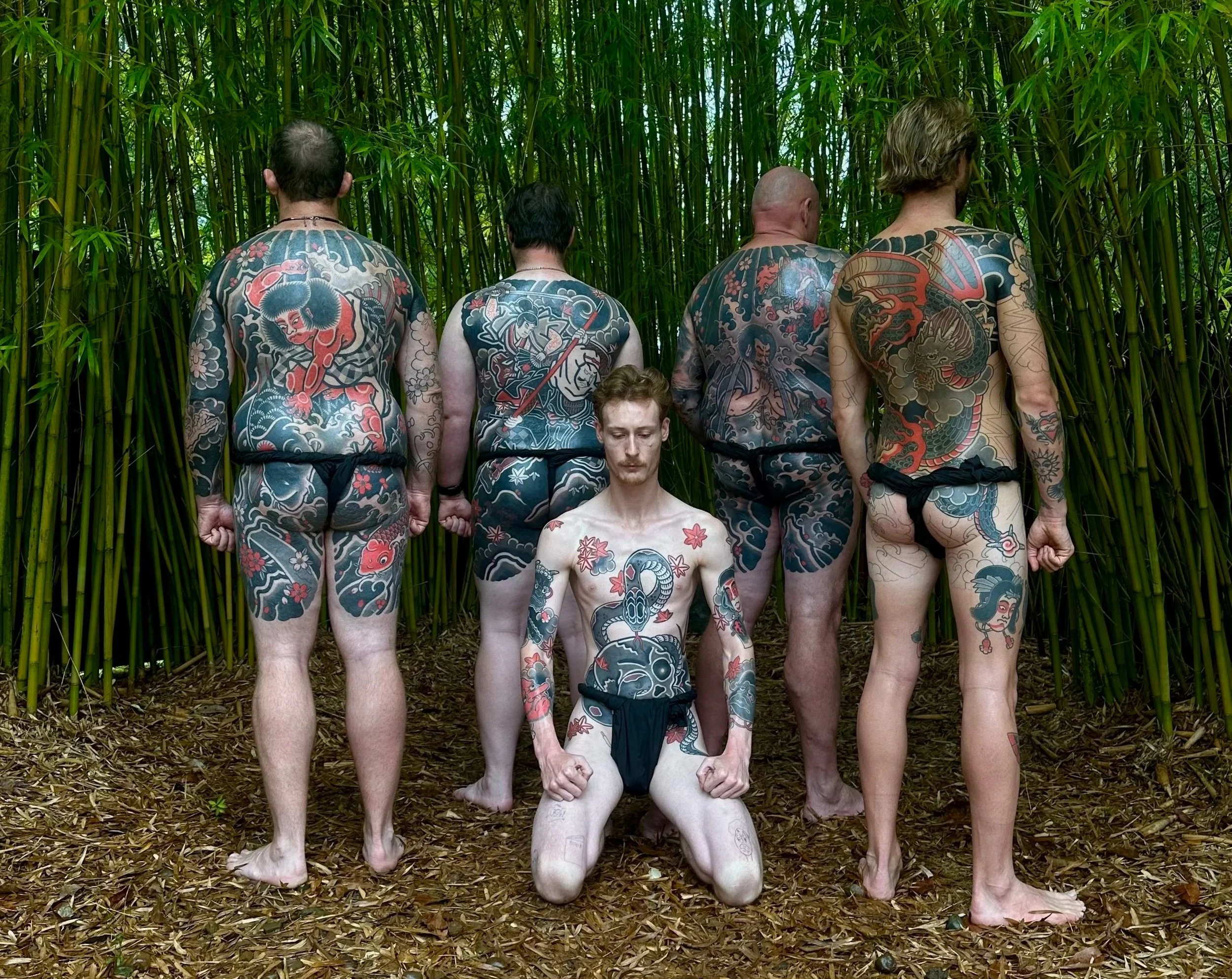
“Large-scale Japanese Tattoos” by Edward Neo
Traditional Japanese tattoos are far more than merely designs on skin. They are a dialogue between artist and wearer, past and present. From the old days of irezumi to the refined beauty of wabori and horimono, Japanese tattooing continues to evolve while holding firm to its roots and discipline, symbolism and tradition.
At its core, it embodies what “tradition” truly means, the passing down of belief and craftsmanship through generations, preserving its spirit while allowing it to live on in new forms.
If you are interested in starting your own traditional Japanese tattoo journey, you can book a complimentary consultation here.
-
Japanese tattoos (Irezumi) are deeply symbolic and narrative-driven, rather than just being decorative.
Common themes can be for spiritual protection such as Buddhist themes, life philosophy such as flowers and moral values such as subjects from certain folklores, especially heroic stories to manifest their characteristic traits.
Each theme should tell a story and resonate with the wearer personally.
-
Yes, you absolutely can.
There are no rules restricting Japanese tattoos to Japanese people. In fact, foreigners have been getting tattooed in Japan since the 1800s and the craft is now globally practiced and appreciated.
However, within Japan itself there is still a social stigma towards tattoos in general. Certain establishments still do not allow tattoos. Just be mindful when you are there and do keep them covered where possible.
-
Traditional Japanese tattooing follows very specific design principles though they may vary from tattooer to tattooer.
The flow of the design must move with the body’s natural shape, creating a tattoo that comes “alive” when the body moves.
As much as the main subject (dragon, koi, warrior etc.) is important, the background (waves, wind, clouds, rocks etc.) is what holds the design together and sets the scene. Therefore, it cannot be taken lightly and everything has to balance out and complement one another.
While there are standard shapes of sleeves, backpieces and bodysuits as a guide, they will vary based on what works best for the individual.
The ultimate goal is to achieve a bodysuit that is one unified theme across the whole body.
-
Tebori is a hand-poked process while machine tattooing utilises the electric tattoo machine.
While Tebori is a more traditional technique and process, machine tattooing has been widely used in Japan for decades and can still replicate the traditional Japanese style of work.
-
Rates vary from tattooer to tattooer and depends on the time taken for the project. Some tattooers charge by the hour while others charge by sessions.
As there are many variables that can affect the amount of time taken, such as size, detail, the area getting tattooed and your skin condition, it is difficult to estimate the total amount of time required for a project.
Japanese tattoos are often considered large projects that require long term commitments, so it is important to discuss with your artist to come up with a plan for your budget and availability.
